Wednesday, August 15, 2012

Rediscovering Melaka (Malacca) by Junn Abriza

It is told that a Sumatran prince, named Parameswara, was credited with the founding of the city and naming it Melaka.

A popular account puts the Prince as out hunting one day and while resting under a tree, one of his dogs cornered a mouse-deer or 'pelandok'.

The mouse-deer in its defense attacked the dog and even forced it into the river-water. Parameswara was so taken up by the courage of the mouse-deer that he decided on the spot to establish a city on the ground he was sitting on. Thus, Melaka or Malacca was born. Many claimed that the prince took this name from the 'Melaka' tree that was shading him.

As time went on, Melaka grew bigger and bigger and became more and more prosperous. Parameswara, incidentally, was the first Malay prince to become a Muslim and inevitably, Islam became the religion of Malays in the Peninsular (now West Malaysia).

The prince known as Iskandar Shah died in 1424. During his rule, Melaka progressed into a booming international trading post, luring over Javanese, Indian, Arab and Chinese sea-merchants.

1st day at ARENA
Last year, February 3, I visited my sister who is one of the three singers of the band Zynchro at the Arena Bar in Melaka. I went with two friends, Jawel and Jessie and spent Chinese New Year at Arena. A lot of friends say that it’s the most popular bar there. The music was excellent, the DJ rocks and the place was full of energy. My sister was able to reserve a table for us before we arrived, so it was not hard for us to get settled. A case of Heineken priced at a holiday price of 300 Malaysian Ringgit, usual price is RM250
On the second  day, we went to Kuala Lumpur,   stayed for another night before I went back again to Melaka to see it in day time, my friends returned to Singapore.


Third Day at JONKER STREET:
Accompanied my sister’s friend Nikka, I walked the streets of Melaka to shoot photos.  The Night market was very colorful, mostly Chinese dominated. Century old houses converted to shops add to cultural atmosphere.  You can see a lot of antiques shops, souvenirs shops selling clog sandals, lanterns up to old coins and other handicrafts.

Food is cheap! Don’t miss “lok-lok”, street foods on sticks (from pork, squid balls, fish, veggies, tofu, and many more) that are cooked by immersing it in boiling oil or water. I particularly like Kangkong on stick. Eat and cook anything at your own pace, just don’t lose the sticks, it is to be counted for your bill. The sticks are also color coded; some priced at 1.00RM, some are 1.25 or 1.50 RM. Don’t miss Jonker. 


TOY MUSEUM. I chanced upon this hidden toy museum along Jonker Street. If you are a toy fan or bringing kids on your trip, a visit here is a must. The museum displays classic collections such as vintage tin toys, Voltes V and other robots made of plastic, classic movie action figures like Bruce Lee, handmade dinosaurs, and even Michael Jackson’s souvenirs.

Later that day, my mother came to Melaka with her cousin Belen and friend Nita. We met at my sister’s place and went to Arena to watch my sister and her band perform.


4th Day, RED SQUARE.  I became a “tourist guide” for my mom and tita’s in Melaka to which I am still a stranger. 
We went to The Dutch Square, it is called Red Square because all the surrounding buildings are painted red.  Located opposite the Melaka River, it is one of the most picturesque spots for postcards, which was formerly the center of Dutch administration. 
Among these eye-catching buildings, Stadthuys is the largest building of them all. In  Dutch, it literally translates as 'town hall' and pronounced as 'stat-highs'. It was built between 1641 and 1660 as the residence for Dutch Governor and his deputy.

Next to Stadthuys is Christ Church. Christ Church was built in 1753 by the Dutch and is the oldest Protestant church in Malaysia. Once you enter, the Last Supper painting made of glazed tiles is visible over the altar. The ceiling of the church is the most notable feature, where the beams are over 15 meters long, and each was made from a single tree.

From Melaka Tourist Information Center and walking at the pathway between Samudera Medan Handicraft Shops and Melaka River we walked for about 10 minutes and reached the famous Maritime Museum. Standing in front of the museum, you will first be surprised with the magnificent structure of the museum and later, redefine the common way you perceive a museum as nothing more than an ordinary building.

A lot of paintings, dioramas, and other historical items can be seen inside.

Apart from showing the significant history of Melaka Maritime, Maritime Museum also showcases the different eras that Melaka has gone through, from the Melaka Sultanate era, to Portuguese era, Dutch era to British era.
 We then head for the Ruins of St. Paul’s Church. It was formerly a chapel named ‘Our Lady of the Hill’ by the Portuguese. The Dutch later renamed it ‘St. Paul’s Church’. On the way up the hill is the original fort built by the Portuguese when they arrived in 1511. They called it A Famosa.
At 5pm, after a lot of goodbyes to friends and families, I went directly to the bus station to go back to Singapore. Back to work!

Tuesday, August 14, 2012

Tears of Memories: Death of Dreams by Khaled Hasan


What happens to the parents when space is limited in the heart and homes of their children?

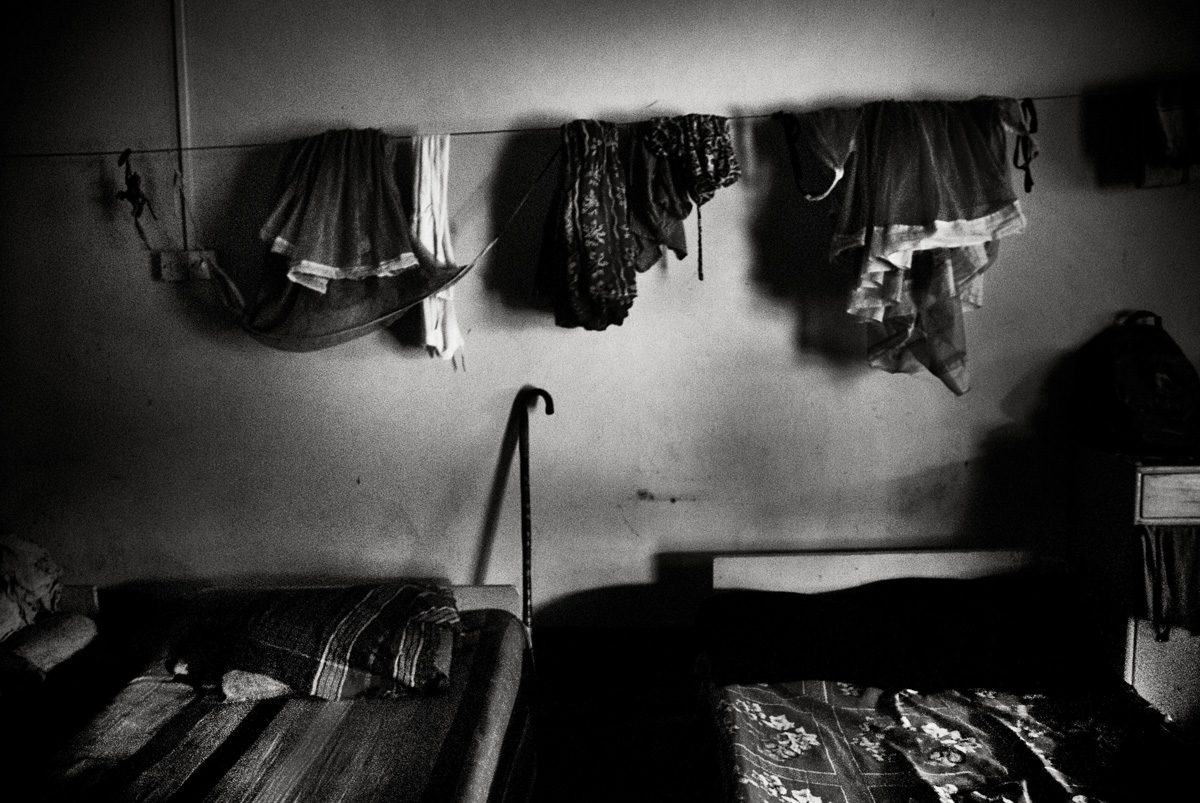
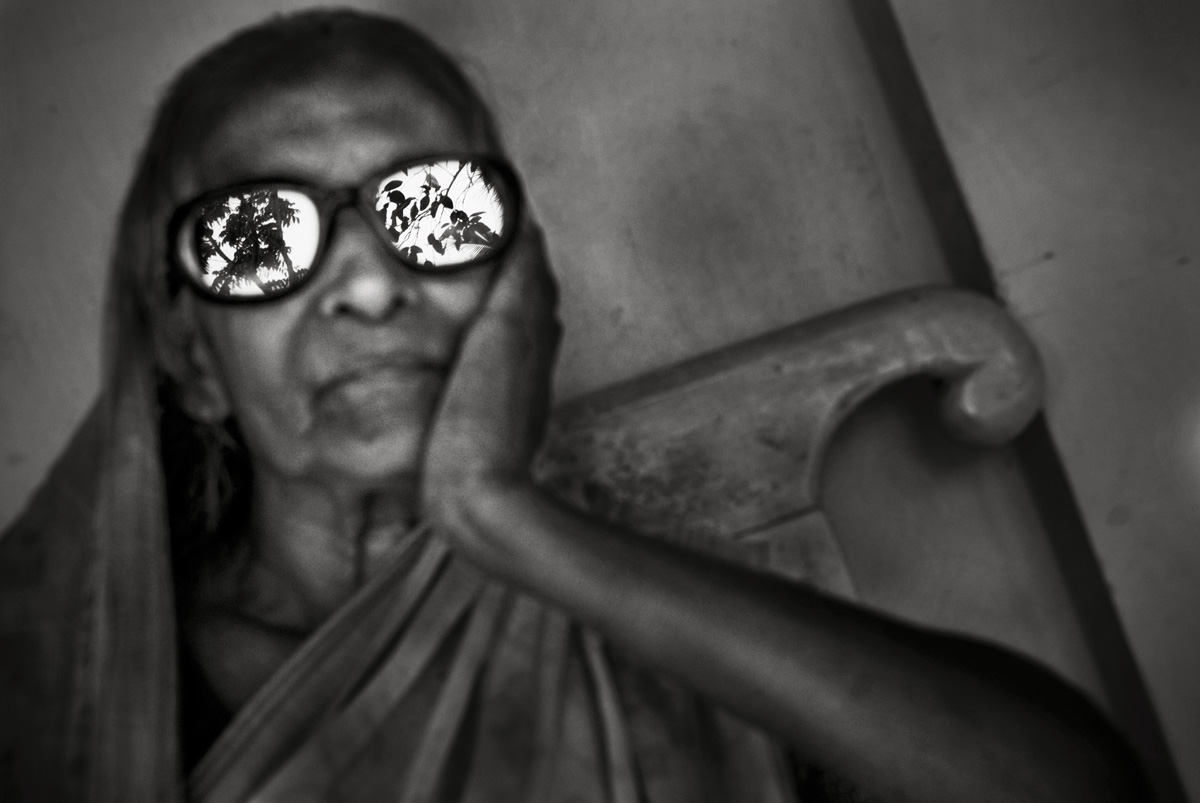
The earth beneath is firm, the stick held by the hand is strong, the dry leaves on the floor are uprooted, and her shadow is distanced from her home. Once an inhabitant of Srinagar, Bikrampur; Anjuman Begum, 93, lives now at this old age home. And she wonders what the word, ‘home’ means. “I want my body buried here; in this old age home. I have made my funeral preparations as well,” says Anjuman Begum angrily. ‘Unfortunate,’ she says with a deep sigh, and walks away cane in hand. 

“I was waiting for my son and he didn’t turn up again. It’s been 22 days now,” Munnujan Bewa, 89, who is counting her days here at this old age home. Her son tricked her who said this is a hospital where she could get her health checked. He never came back to take her. She is still counting the days. And her tears remain uncounted. 
 
Old age homes have become very popular in urban Bangladesh. Maybe it is another side effect of rapid globalization. The traditional structure of the Bangla family is metamorphosing into a fast, racy lifestyle. Where ambitious youth are discarding the old values and their parents. The parents are left alone in shelter homes, where they are fighting an ongoing battle: a battle with old habits. Where the man, who was once the head of the Bangla family, is learning to be a peaceful member of a new house, full of strangers. The woman who once happily cooked three meals a day is now stopped from entering the community kitchen. There are no phones in the old age center. The residents know no one will asks for them. The wrinkles on their faces are pronounced and so are the pains of being discarded–the bitter realization that we are all dispensable. It is the evening of their life but at the end they are left with unfinished dreams and many unanswered questions. 


“My husband always talked sweetly, he traded sweet sugarcanes,” says Johura Khatun, 75, was left here by her children after her husband died. The wrinkles on her skin show her age, but she is always jolly and young in her mind. Nicknamed “Tuntuni” by her new buddies, she captivates the heart of everyone with her delightful stories. 


They think almost the same. Both of them think about departure. One accepted the fact. Another is scared of the final journey. 

 
In Dhaka's largest old age home, Boshipuk, the residents ask this question everyday— how after a lifetime of striving to establish individual ownership and entitlement, they are now fumbling to cope with this new sense of communal life, against their wishes. Dhaka is racing ahead to be the most densely populated city and in the process the landscape of the traditional Bangla family is being rapidly erased. Joint families are replaced by nuclear families and the old parents are relocated to grim old age homes. Respect for elders is being washed-out.  

The twinkle in his eyes is still there. "I am happy with my life,” says 72 year-old, Shamsuddin Bhuiyan. "I pray for my children so that they live peacefully."  

The lifeless things will remain still. They will remain silent. The users will come and go. The uses will sustain. Remembering those old users; who are not there anymore. 
 
This is what my documentary project focused on. I believe in immersion photography. I listen, observe, and talk with my subjects over an extended period of time. So, I am focused on one old age home, following the daily lives of the residents for two years. 

Do you know Kulsum Bibi (an active freedom fighter of our liberation war). Few will remember her; she is not a top leader. Why? Is it because she migrated from Myanmar to the then East Pakistan in 1963 and lost her hearing power while participating in the Liberation War for our country in 1971? Is it because she was exiled to live in this old age home after being robbed by our fellow Bangladeshis? Did you not hear when she cried? Do you hear her now? Are we not deaf?  

The trees are standing proudly on the ground so is the grass. “We stood when we were young. Everyone will grow old if they are live,” says 90 year-old Abdul Rahman.  


My storyline focuses on the process of forgetting an old life and coping with a new habitat. Most of them fervently wish things would change and be like how they always dreamed it—singing lullabies to their grandchildren—one happy joint family. My photos address the question: How the older generation in urban Bangladesh deals with this loss of ownership and learns to share with strangers. Simple chores like reading the newspaper or watching TV now requires consensus. The menu is now voted on. As they reroute their lives, they learn to manage tales of new friendships, gossip, bonding, petty fights, arguments, jokes, negotiation and the myriad emotional challenges.

The imprint of her feet is still there on her over used sandals. The footsteps of Shurovi who died on 25 June ’09 at the age of 70, will never touch the ground. Everyone will forget her eventually. The old age home will be filled up again by someone else. Some other sandals will be carrying signs of some other feet again.  

The dried leaves, the withered skin, the faded clothes, all remind her everything is disposable in life. Including her.  

We, the young and working class of our society, claim that we are working to create a better future and society for our next generation. While claiming this, we ignore the people who have created the present; who contributed their entire life for the betterment of their children. We have forgotten about the contribution of the last generation, and the sacrifices they made for us. 

These eyes are dimming. They don't have any more hope, neither from her family, nor from herself. At 75, Momena Khatun is the oldest person who has been living here for the last 13 years. She got married when she was 7; her husband died a month later. She never remarried. At the fag end of her life, she doesn’t wait for anyone to take care of her; she is just waiting for life to stop.  

For when we start, we have to end. And this journey towards the end is not slow. This happens in a flash. You revisit every memories of your life, from birth till death, within the quickest of time. And those left behind would hurry you down to earth, to your final home. And then, no more old age home. No more homes.  

Being a documentary photographer I tried to represent what the elderly population expects from the society and their loved ones. Photography has the visual power to educate by allowing us to enter the lives and experiences of these socially neglected people. I spent a long time with them and they share their life experiences with me, I tried to show their silent emotions and grief. 

Journal Entry – Rain rain go away


A pregnant women, assisted by a man crosses the flooded area of Barangay San Vicente Angono, Rizal on August 9, 2012.
72 hours of non-stop rain, I was thinking Ondoy 2, please no. I was helpless as I was stuck in the city. We had no TV so I listened to the radio. I stepped out of the house once to load my mobile phone and I saw our street flooded, which was already a high place. I somehow decided to leave my dlsr  at other house the past week, so I had no camera, except for the cell phone, which I took some quick snaps with it after getting loaded. 

A view of the Angono Municipal Gymnasium which has been converted into an evacuation center, August 9, 2012. Around 300 families occupied the area.
When the rain stopped the next day, I decided to get my camera and visit my hometown Angono, Rizal. On the way there, rain poured hard again and since most roads were flooded,  I had to take alternate routes. Finally, after 3hrs of travelling I got home, rested and prepared for next day. 

I woke up pretty late (which was not part of the plan), I went first to the Municipal Hall, and asked around the areas and number of families affected by the rains; they said Barangay San Vicente and Kalayaan were the most affected. Having no clue to where exactly those were, I walked around and asked for directions and somehow I bumped into a 4x4 pickup truck, who allowed me to hitch along. I thought the truck was delivering relief goods since it had sacks of rice and bottled water, but to my surprise it turns out the goods was actually for owner of the car, I felt a little dismayed but thanked them for the ride anyway.

Residents of Barangay Kalayaan Angono, Rizal use make shift boats to transport dry goods on August 9, 2012.


So, I submerged myself in the waist deep water and as it got deeper and deeper, a boatman offered a ride and we went around the area. The place was chest high, when they saw the camera, their faces smiled as if nothing happened. They kept on asking “From what TV station/News agency are you?” I didn’t really know what to say back, but I told them a few. They told me, “You’re the first person with a camera to go here, can you please tell them to give us food? We’ve been living like this for two weeks” (a typhoon struck a week before) After going around the area for about an hour, I told the people at the Municipal Hall about the situation and sent the pictures to different news agencies right away. The next day I had to go back to the city since I had office work. I wonder how they’re doing now. I wish the rain would stop for a while.


Dogs are left stranded in an abandoned house in Barangay Kalayaan Angono, Rizal on August 9, 2012.

A child uses a make shift boat to transport along Angono National High School on August 9, 2012. The school submerged in water is used as one of the evacuation centers around the area.

Sunday, August 12, 2012

Summer of 2008


Four years ago Rya and I did something extraordinary. We traveled from Shizuoka city to Kagoshima city, a distance of 1,195 km, using the local train with the Juhachi Kippu for five days.

She was to attend a special class at Kagoshima University. Ken was still in the Philippines with the family so I was free to go with her. 

Day one, we took it slow. After four train transfers, we stayed in Kyoto for the whole afternoon. We first visited the Fushimi Inari Taisha. The place has been at the list of my places to visit in Kyoto for quite some time. The thousand vermillion torii is just breathtaking. Rya went inside to feel how Sayuri, the main character of the movie Memoirs of a Geisha, felt when she run up and down the gates. I, on the other hand, pulled my tripod and positioned myself for a few shots.


Next stop was the Gion district. Geishas and maikos in full regalia are oftentimes seen walking these old-style Japanese houses-lined streets. It is a sad thing that these beautiful ladies are sometimes seen as "prized catch" by tourists. I have to admit I am guilty of this iniquity during that day. The next time I will visit this place I will summon up my courage, walk to them and ask them politely for a photograph. 

We left Kyoto around 6PM for Osaka where we boarded the Moonlight Kyushu which departed around 10PM and arrived around 8AM the following day at Fukuoka. Located at the northern part of Kyushu, Fukuoka is Japan's 7th largest city and the most populous. 

After washing up and grabbing something for our breakfast we headed south. Two train transfers later we arrived at Kumamoto. We stopped by and visited Kumamoto castle. Kumamoto castle is one of the most magnificent castles I have ever visited. It takes a whole day to wander the castle grounds and may take multiple visits to fully enjoy its grandeur. 


I was asking for more when we left Kumamoto, hoping that I will be able to visit again someday. We arrived at Kagoshima around 10:30PM totally exhausted. I guarantee that both Rya and I were snoring like warthogs.  

Grey skies and clouds were deterring the view of Sakurajima the following day. The plan for the day was to take images of the volcano. Instead of moping around I went to the ruins of Kagoshima castle. Then the situation worsened when it began to drizzle. So, I decided to cool down back at the hotel.

When I went to meet Rya at around 5PM, we hurried to the food district and had our early dinner of Kagoshima ramen. The roasted black pork influenced the soup giving it a charred flavor. I remember slurping the noodles in succession.  The taste hit home for Rya and I. We were so full that we decided to walk our way back to the hotel. And then just around the corner we heard noises. We went to see what it was about and right in front of us was an ongoing festival. "Naked" men in fundoshi were carrying a mikoshi or a portable shrine. Just when I was about to take a  few snaps they stopped for a beer break. One thing "regrettable" about this adventure was I did not take enough images. Maybe it is a beginner thing. The lack of tenacity to "get" the shot. Or maybe it was just me being lazy. 


Our night cap was doing some slow shutterspeed shots and panning. With the long day ahead of us, we hit the sack at 9PM.

After six train tranfers, we arrived at Fukuoka 2 hours early for our train back to Osaka. Inside the train we were eating local treats, from steamed sweet potato with sweetened red bean paste to steamed buns. Night trains are very favorable to those who do not want to be disturbed by frequent stopovers.  

On our last day we stopped by Kyoto again. This time we checked out the Byodoin Temple in Uji only to be disappointed because the place was crawling with tourists. I think it is best to visit the place during autumn when the foliage is in amazing colors.  


We arrived at Shizuoka around 7PM feeling the "accomplishment". I told Rya to stand in front of the Shizuoka station sign holding the Juhachi Kippu up and clicked. It was irresistible. With Rya getting an extra credit for her degree and me being able to visit a few castles, for just around 10 000 yen instead of 100 000 yen, summer of 2008 was unforgettable.

* The Moonlight Kyushu was discontinued the following year. Even until today there are still no direct Osaka-Fukuoka moonlight trains.

Photos of Disaster in Poverty by Nabin Baral

If someone asks with me a photo of disaster, I always go to explore the folder of the Fire Disaster in Poverty in my hard disk because these photos are my first photos of disaster that I took in the beginning of my photojournalism career. This is the first time in my life which made me in confusion whether I should act as a social person in disaster or should I capture the moments of disaster as a witnesses.
A man from Chepang Community tries to save the house of Sher Bahadur Chepang from fire disaster. 15th November, 2009. Dhading, Nepal. Photo:Nabin Baral
The images and the disaster situation of the fires disaster have made a permanent memory in my mind. I was in an assignment to take the photos of shifting Cultivation of Chepang Community in Jogimara Village Development committee of Dhading district of Nepal. It was early foggy morning of November 15, 2009. I was sleeping inside my sleeping bag in a house of Chepang, one of the most backward indigenous ethnic groups of Nepal. Some women shouted in neighbor "Fire! Fire! Help! Help!
Villagers help to assemble the maize that Sher Bahadur Chepang was able to save.15th November, 2009. Dhading, Nepal. Photo:Nabin Baral.
Helpless women and children from Chepang Community watch the fire disaster.15th November, 2009. Dhading, Nepal. Photo:Nabin Baral
I quickly got out of sleeping bag and rushed towards the shout. I saw a house on fire and some children and women were trying to extinguish it but helpless. One of the women shouted "water, bring water! There was no water until the moments when fire ate half of house roof that was made up of straw. Fire showed its maximum strength in the poverty where there is no fire brigade. Even, the only common water supply tap in the village was also without water supply. Later I knew that the only drinking water supply in the village is irregular. How can villager take help of water to extinguish disaster fire, where there is no sufficient supply of water to drink? I try to help too but I found myself helpless, because there was not weapon to fight against this cruel fire. Suddenly one of the villagers brought pipe with water supply but it was late and the water supply was too small to fight against the mature fire. Until this moment I hadn't took out my camera but when the fire was out of control I decided to capture this tragedy. Most of the villagers were fighting against the fire.

One thing, I noticed that they were trying to save the stock maize, which was inside the house, from fire by taking the great risk. The house owner, Sher Bahadur Chepang, who built this house alone in 6 months just three months ago, was taking biggest risk with fire to save the stock maize which is the main food for his two sons and wife, who was crying by the side of the burning house with one of her son.


At last they were not able to save their house but they were only able to save most of the maize stock. Later my friend Kamal Aryal, who is specialist in Shifting Cultivation in Nepal, explained me the importance of maize in the life of Chepang.
The wife and youngest son of Sher Bahadur Chepang. 15th November, 2009. Dhading, Nepal. Photo:Nabin Baral

Most of the Chepang people in Nepal don't have registered land and they have been practicing shifting cultivation around their village in the slope area since many generations. It is not possible to produce rice in shifting cultivation and Chepang people can't afford rice because they don't have other source of income except to depend on the shifting cultivation that their forefather taught them to practice. Maize is the main food produced from shifting cultivation with great hard work and is the only staple food of Chepang. Maize is produced once a year from shifting cultivation and which is only enough to serve a chepang family for 4 to 6 months a year. For rest of the months, Chepang people heavily depend on wild and uncultivated foods and or migrate to city areas as low paid labor.

Now I realized why Sher Bahadur Chepang was fighting with the fire not to save cloths and utensils but to save Maize.
The family of Sher Bahadur Chepang in front of their destroyed house. 15th November, 2009. Dhading, Nepal. Photo:Nabin Baral


Tuesday, July 31, 2012

Dax Simbol

Guys got game. Jay Custodio, 21 years old, pulls up a jumper, during a friendly basketball game for the differently abled at the Tarlac City basketball court during the celebration of the 34th National Disabilty Prevention Rehabilitation Week (July 17-23). Custodio said he was born with the disability but doesn't take it as a burden, he repairs appliances for a living.